
Comanche Federal Release Paths
Comanche County has no ordinary BOP institution. A federal defendant connected to the county may be held under U.S. Marshals Service authority in a contract jail, transported between facilities, and later received by BOP after sentencing. A departure from CCDC or another local jail can therefore be a federal transfer rather than release to the community.
BOP, USMS, ICE, and the military are separate. BOP runs federal prisons and its national locator. USMS handles many federal pretrial and transport prisoners. ICE manages immigration detention. Fort Sill's Personnel Control Facility has a narrow Army role. Start with the case and custodian, not geography.
Search the Federal Locator
The BOP Inmate Locator searches federal inmates from 1982 onward and includes some older records. An identification number is the safest key. The locator accepts BOP register, DCDC, FBI, or INS numbers. A name search can be narrowed with descriptors, which should be checked carefully to avoid joining two people with similar names.
A former inmate may display a release date with “Released” or “Not in BOP custody.” Read those values in BOP's scope. A release date is affirmative federal-prison information. The broader status can also cover a person transferred to a non-BOP custodian or otherwise outside BOP. Compare the federal criminal docket and any known receiving authority when the destination matters.
- Search a federal identification number when one is available.
- For a name search, verify spelling and descriptors against the case record.
- Record the status and release date exactly as labeled.
- Check the federal docket for sentencing, release, or transfer-related orders.
- Use USMS, ICE, military, or receiving-facility channels when BOP is not the responsible custodian.
The Comanche County release search provides the separate route for a county booking that preceded or followed federal custody.
BOP Release Record Meaning
The federal locator answers a national BOP question. It is not a complete release instrument or a court docket. Preserve the displayed date and status, then note the access date. If exact destination, legal authority, or supervision information matters, seek the relevant public BOP record and court material.
| Locator result | Careful reading |
|---|---|
| Released with date | BOP reports the person left its custody on that date |
| Not in BOP custody | Person is outside BOP control; destination needs confirmation |
| No result | May reflect scope, spelling, timing, identifier, or another custodian |
| Facility listed | Current BOP assignment as reported, not release |
The official BOP search screen appears below.
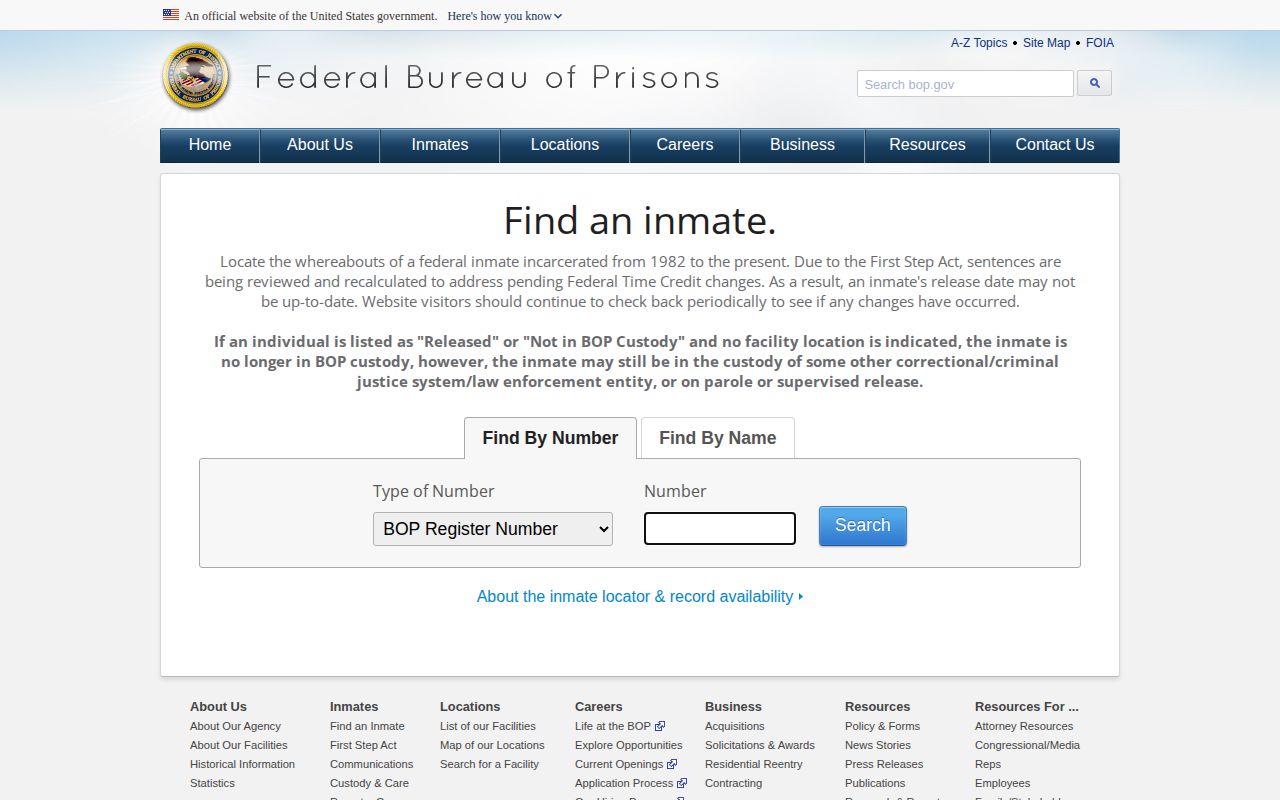
The image identifies the national search fields; the live result and federal case must be checked for the named person.
USMS Release Confirmation
The U.S. Marshals Service manages many federal prisoners before trial, during transport, and while placement is pending. It does not offer a broad public historical locator comparable to BOP. A person held at CCDC under federal authority can leave the county jail yet remain a USMS prisoner. The CCDC release record may show the local exit or receiving agency, while the federal court and USMS route explain continued federal control.
Use the USMS prisoner-information channel, federal defense counsel, and the court clerk as appropriate. A case docket can show detention, release conditions, sentence, or a later order, but may not display the physical transport time. Ask the local jail for its release or transfer entry when the county departure itself matters.
Note: A USMS transfer ends one facility stay while federal custody continues under a different placement.
ICE Locator Release Limits
The ICE Online Detainee Locator accepts an A-number plus country of birth or a name with biographical details. It is designed for immigration detention lookup, not as a permanent historical release archive. A no-result can have several causes and should not be converted into a confirmed immigration release.
If someone leaves CCDC on an ICE hold, characterize the event as transfer to immigration custody unless ICE, counsel, or a record documents community release. ICE outcomes can include recognizance, bond, supervision, removal, or transfer. The locator alone may not state the legal reason. No official source in the research established a current dedicated long-term ICE detention contract at CCDC, so claims about such a contract should not be added.
| Event | Best confirmation |
|---|---|
| CCDC exit on ICE hold | County release record plus ICE custody check |
| Current immigration detention | ICE locator or authorized ICE/counsel contact |
| Immigration community release | ICE or legal record stating the disposition |
| Removal or transfer | Responsible immigration record and counsel |
Federal Records Contact Route
There is no local BOP prison contact card because Comanche County has no ordinary BOP institution. Use the national agency responsible for the custody and the relevant federal court docket. If a contract jail held the person, contact that jail only for its local booking, transfer, or release record. It cannot certify the full federal sentence history.
Federal Custody Channels
Bureau of Prisons: official Inmate Locator
U.S. Marshals
Service: prisoner-information channel
ICE: Online
Detainee Locator
Federal case: responsible court clerk or
counsel
Provide a federal identification number when known. Ask for an existing public record and define the event: BOP release, local-jail transfer, USMS movement, or immigration disposition. Broad requests that mix systems produce unclear answers.
Federal Status Terms
Federal records use dates for intake, court events, transfers, projected release, and completed release. They are not interchangeable. A sentence date is not a gate date. A transfer date is not return to the community. “Not in BOP custody” is limited to BOP and should be paired with the displayed release date and outside records.
- BOP custody
- Confinement or control recorded by the Federal Bureau of Prisons.
- USMS custody
- Federal pretrial, transport, or placement control managed by the Marshals Service.
- Detainer
- A request by another authority to hold or receive a person.
- A-number
- An immigration identifier used in the ICE detainee search.
An affirmative release or transfer record is stronger than absence. When two sources conflict, preserve the labels and ask the originating agency to correct or explain its entry.
Trace a Comanche Federal Transfer
A Comanche County booking can sit at the start of a federal timeline without becoming a federal-prison release record. A person may be held at CCDC under U.S. Marshals authority, leave the county jail for transport, and remain a federal prisoner. If sentencing later places the person in BOP custody, the national locator becomes useful after BOP receives and records the person. The county release row describes only departure from CCDC.
Build the sequence with the booking number, federal case number, and federal identification number where available. The CCDC record can identify the local exit date and receiving agency. The federal docket can explain detention, sentence, or a judicial release order. USMS is the proper channel for federal pretrial and transport custody, while BOP status and a displayed release date apply to federal prison custody. Matching these events prevents a transport date from being reported as community release.
Timing gaps do not prove an error. A person can leave one jail before the receiving database shows the next placement. Save the access date for every search and check again with the responsible custodian. If records conflict, state the conflict and ask the agency that created the disputed entry for correction or clarification rather than choosing the most convenient result.
Federal Court Release Evidence
A federal court docket supplies the legal context that a locator cannot. Depending on the case, it may show a detention order, release conditions, Judgment, sentence, revocation, or another judicial action. The docket date records the court event. It may not show the minute a jail or prison completed physical release. Pair the order with the custodial record when exact timing matters.
For a former BOP inmate, preserve the locator's literal status and release date, then compare the case. “Released” supports departure from BOP on the shown date. “Not in BOP custody” is broader and may reflect release, transfer, or another circumstance outside BOP control. A federal supervision term can also continue after confinement ends, so physical release should not be restated as completion of every court obligation.
For a USMS-held defendant who never entered BOP, the locator may have no useful result. Use the court clerk, defense counsel, and official USMS prisoner-information route instead. For immigration custody, use ICE and counsel. Military control at Fort Sill follows Army channels. The type of federal authority, not merely the word “federal,” determines the record path.
Names alone can collide. Prefer a BOP register, DCDC, FBI, INS, or case number, and compare lawful descriptors. Record the source and date. An affirmative release, transfer, or court entry is stronger than absence from any locator. Keep the exact agency label with the result.
Public Record Search
Sponsored Results