
Comanche County Projected Versus Actual Release
The Oklahoma Pardon and Parole Board glossary defines projected release date, or PRD, as ODOC's estimate of when an offender will be released. Some newer records may use calculated release date, or CRD. Preserve the field shown in the source. The two labels should not be silently treated as identical in every file.
An actual release is a completed custody event. It appears in a jail release entry, ODOC status or history, VINE custody change, or another record maintained by the custodian. A projection is planning data. It can rise or fall as credits, conduct, programs, holds, sentences, and parole processing change.
Scheduled versus actual: A projected date is an estimate. Confirm release only after the jail or ODOC records the custody exit.
Pretrial custody works differently. A CCDC detainee awaiting disposition does not have a sentence-based release date. Bond, dismissal, a court order, or another event may authorize release, while a separate detainer can still prevent community departure. The court record explains authority. CCDC records the physical exit.
Parole eligibility is another distinct date. It marks when consideration may occur under the governing rules, not when the person will leave. A PPB meeting date is the board event. A PPB result records action. Only later ODOC or VINE status can establish physical prison release, and discharge may occur after a period of community supervision.
Find Comanche County Projected Release Dates
Start with custody, not the person's last known address. The ODOC lookup follows a state sentence and can retain a record after prison release. The CCDC roster and Past Inmate functions follow county bookings. A person may leave CCDC for ODOC and remain incarcerated, so the first release date can mark a transfer rather than freedom.
- Identify whether CCDC, Lawton Municipal Jail, ODOC, or another agency controls the current custody.
- For ODOC, open the Offender Lookup and search by DOC number when known.
- Match the correct person with sentence, county, conviction, and physical descriptors. Names alone are not enough.
- Read the status, facility, sentence history, and any public date field exactly as labeled.
- For a CCDC sentence, compare the Judgment and Sentence, jail-credit entry, and CCDC calculation. Ask the jail how the rule was applied.
- Check for other cases, detainers, consecutive sentences, and parole steps before relying on the estimate.
- Confirm the completed event through the custodian's status or release record.
The ODOC search form is the state-custody starting point for a Comanche County projected release date.
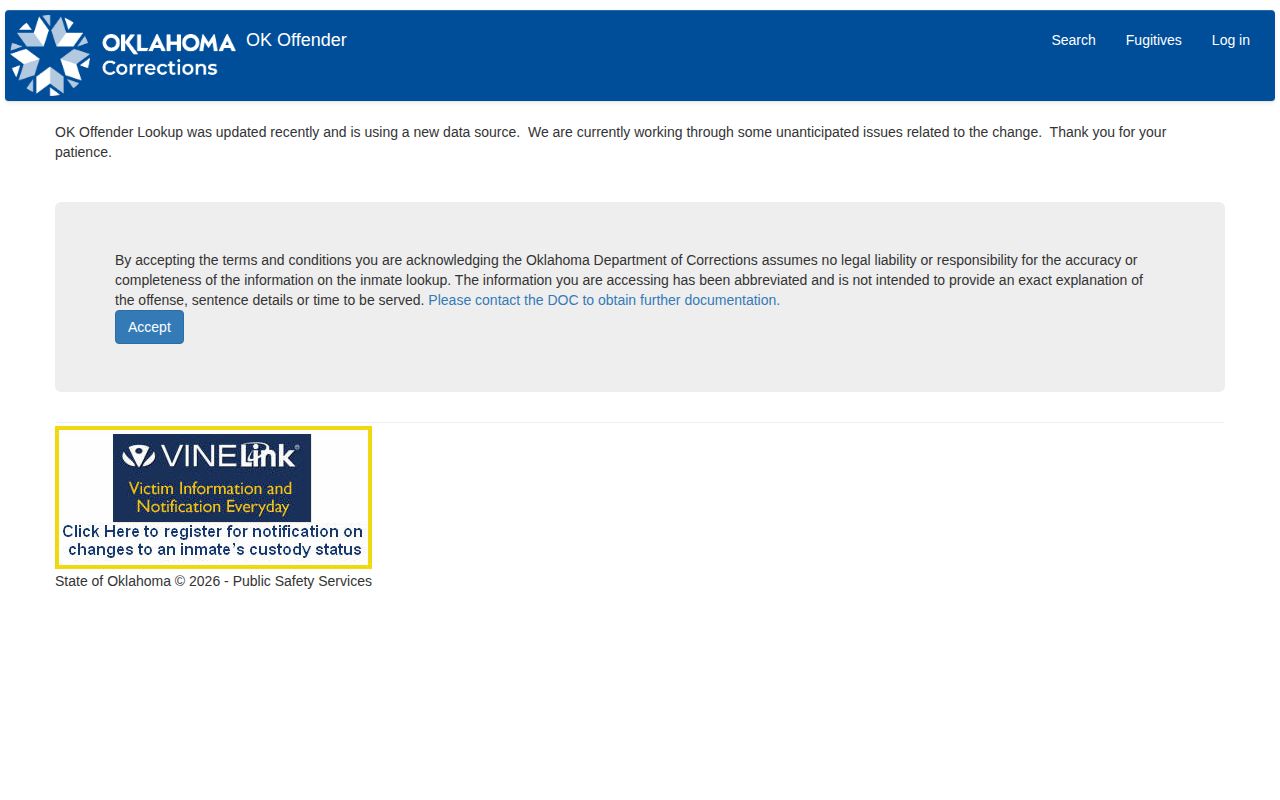
The public lookup is abbreviated. A CCDC-only booking that never entered ODOC will not gain a state release date merely because it occurred in Comanche County.
If the county case shows a state sentence, expect a handoff between systems. ODOC says reception from a county jail can take months in some cases. CCDC may record a release or farm-out when transport occurs, while the person remains confined under the state sentence. Search the ODOC record after reception and preserve both dates with their true labels.
When a public result does not answer the question, request only the relevant record. For ODOC, identify the offender and DOC number and ask for the public face sheet, sentence data, reception and release history, or discharge entry. For CCDC, identify the booking and request the release sheet or liberation instrument. Court-certified orders come from the Comanche County Court Clerk.
Oklahoma Earned-Credit Calculations
Under 57 O.S. § 138, eligible ODOC inmates can earn credits through class levels and achievements. ODOC policy OP-060211 implements the monthly calculation. Credits can be lost for misconduct or nonperformance, and some may be considered for restoration. Class changes and program achievements can also alter days remaining.
ODOC's projected-release worksheet models possible dates for several time horizons and placements. It expressly excludes people with restricted earned credits. The worksheet is not a release certificate and should not be used as a public calculator for a named person. Consecutive sentences, jail credit, escape time, revocation, discipline, and offense restrictions must be applied to the actual file.
The ODOC earned-credit policy describes the agency calculation. A reader can use it to understand why the estimate changes, but only ODOC has the current inputs for a specific state case.
Note: Parole eligibility, a projected release date, and final discharge are different milestones and may appear on different records.
Why Comanche County Release Dates Change
A date moves when a legal or administrative input changes. Some factors affect sentence math. Others block physical release even though the calculation itself remains intact. A pending date should be read alongside the current status, sentence structure, and holds.
| Factor | Possible effect |
|---|---|
| Credit class or achievement | Eligible earned days can reduce time remaining |
| Misconduct or nonperformance | Credit loss may move the projection later |
| Restricted-credit offense | Statutory limits can cap how much credit changes the term |
| Jail credit or corrected order | A verified correction can alter the sentence computation |
| Consecutive sentence or revocation | Additional time can change the controlling end date |
| Detainer or hold | The person may leave one facility but enter another agency's custody |
| Parole action | A decision may start more review and processing before physical release |
A PPB grant is not the gate event. Residence plans, stipulations, detainers, executive action where required, and ODOC processing may remain. A denial or later parole date can also change expectations without rewriting the sentence itself.
A detainer is a notice that another authority may take custody. It can cause a person to leave CCDC or ODOC on the expected date without returning to the community. A farm-out indicator can signal similar movement between facilities. Search the receiving agency and preserve the distinction between release from one custodian and final discharge from the sentence.
Confirm Comanche County Release Dates
ODOC states that an exact future release date for a particular inmate is confidential without a legitimate need. The inmate receives a monthly days-remaining calculation and may choose to share it. Even then, ODOC calls the date tentative because credits and conduct can change. A public field must be repeated only with its own label and current status.
The official ODOC offender information page explains those limits.
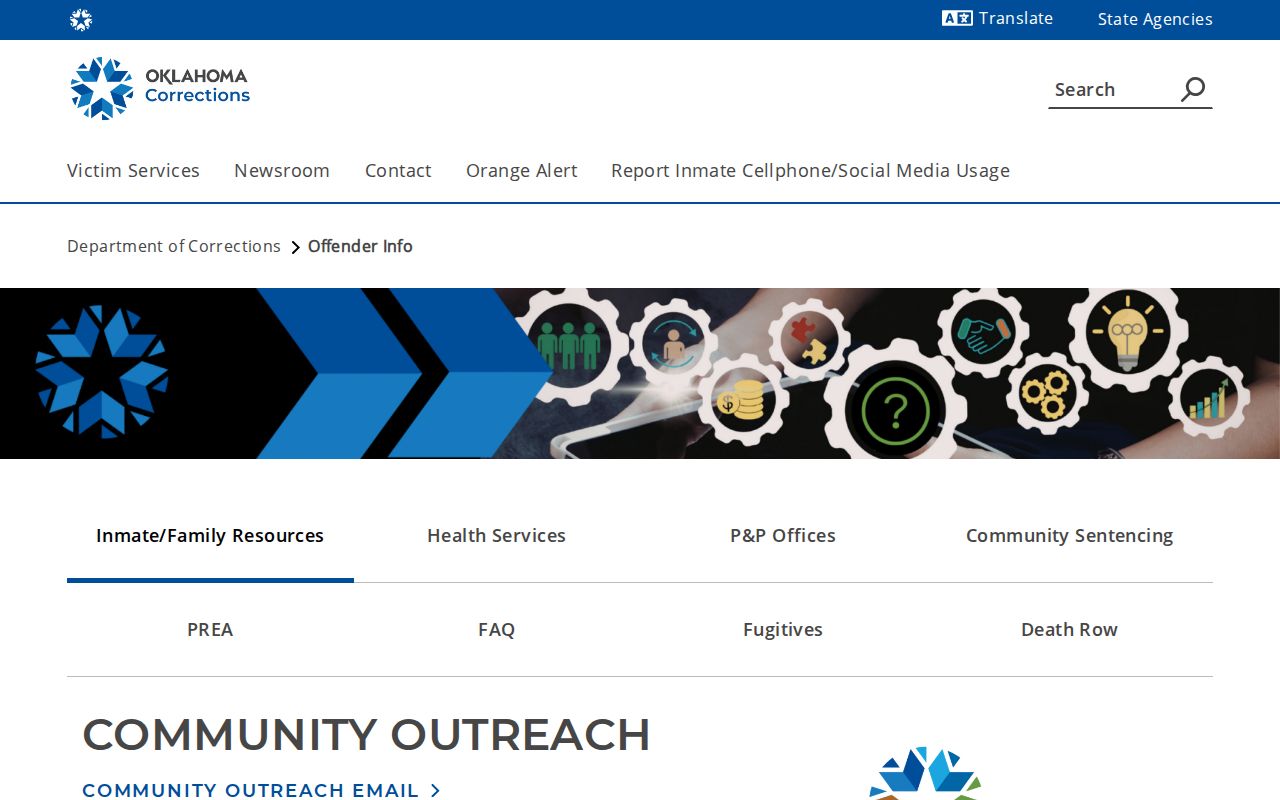
The agency warning prevents a projected field from being mistaken for a completed Comanche County release.
For advance notice, register through the Comanche County VINELink check. VINE can report an agency-fed custody change, but it can lag. For a durable county record, ask CCDC for the release sheet. For state custody, compare the ODOC status and history after the date passes.
When the expected date passes without a status change, do not infer an error or release. Credits may have changed, a hold may exist, processing may be incomplete, or the public screen may lag. Contact the responsible records office and ask about the labeled field. Keep any response with the access date so an old estimate is not presented as current.
Oklahoma's 85 Percent Rule
21 O.S. § 13.1 lists specific serious offenses for which a person must serve at least 85 percent of the sentence before parole consideration. Earned credits cannot reduce the term below that threshold. This is offense-specific. It does not mean every Oklahoma prisoner serves exactly 85 percent.
The version of the offense law, sentence date, and conviction must be checked. Section 57 O.S. § 138.1 adds restrictions for listed offenses and interacts with the 85 percent rule. Eligibility only opens the chance for parole review. It does not guarantee approval or the date of physical release.
A date calculated from sentence length alone will miss jail credit, consecutive terms, revocation, restrictions, and current agency inputs. Use PPB records to understand consideration, then ODOC or VINE to confirm the eventual custody event.
Section 13.1 does not supply a shortcut for the final day. Even after the threshold is met, the person may not receive parole, and the sentence can continue. Conversely, another lawful release route may depend on rules beyond parole eligibility. The actual offense of conviction and the statute version tied to it must control.
Comanche County Jail Credit
Oklahoma has a specific county-jail credit rule. Under 57 O.S. § 65, a prisoner who satisfactorily follows jail rules receives five days of credit for each four days actually served, subject to the statute's terms. The sentencing order, awarded jail credit, conduct, concurrent or consecutive structure, and other holds still matter.
Ask CCDC how it applied the law to the particular sentence. Do not convert the ratio into an authoritative online release calculator. A court order in one case can coexist with a hold from another case or agency, and a transfer to ODOC is release from CCDC but not from incarceration.
The court's Judgment and Sentence may state credit already awarded for time in custody. Jail staff then administer the county term under the order and applicable law. A mismatch between a private calculation and the agency's date should be raised with the court, counsel, or custodian using the actual record. Guessing from the booking date alone is not reliable.
Comanche County Weekend Release Dates
No general Oklahoma rule was verified that requires CCDC to move a sentence release to Friday whenever a date falls on a weekend or holiday. Comanche County does publish weekend bond rules, but those govern a listed path for certain misdemeanor bonds when the courthouse is closed. They do not create an automatic sentence-date adjustment.
This distinction is the local release-date quirk. Bond is a pretrial release route. County-jail credit changes eligible sentence time. A projected state date is an ODOC estimate. Keep all three separate, then wait for the jail or state status to record the actual exit.
For a named person's full county custody trail, the Comanche County released inmate search explains how to pair a jail release entry with the court case.