
Comanche County Parole Versus Probation
Parole and probation can both place a person in the community under ODOC oversight, but they begin in different ways. The Oklahoma Pardon and Parole Board, or PPB, handles parole decisions and recommendations under state rules. ODOC Probation and Parole manages supervision after release. A Comanche County court may instead order probation through a suspended sentence. That court action does not show that the person first served time in state prison.
The status must be read in context. A favorable PPB result is a decision-stage record, not proof of the date the person left a prison gate. A probation entry may begin after jail, after part of a prison term, or with no prison reception at all. The controlling court order and the current ODOC record supply the needed context.
| Point | Parole | Probation |
|---|---|---|
| How it starts | Release from prison under a parole decision and conditions | A court orders community supervision, often through a suspended sentence |
| Main record | ODOC status plus any PPB docket and result | Comanche County court order plus ODOC supervision status |
| What it proves | Community release remains tied to the prison sentence | The person is subject to court-ordered terms |
| How it ends | Discharge or other official end shown by the responsible agency | Completion, discharge, revocation, or another court action |
- Parole
- Physical release from prison while the rest of the term is served under conditions.
- Probation
- Court-ordered supervision in the community, sometimes tied to a suspended sentence.
- Discharge
- The official end of the identified custody or supervision obligation.
- Deferred sentence
- A delay of judgment that may end in dismissal and possible expungement after successful compliance.
Verify Comanche County Post-Release Supervision
Begin with the custody system that handled the sentence. The ODOC Offender Lookup can show state incarceration, community placement, probation, parole, or prior status. Use a DOC number when known. A name match needs a second identifier, such as the sentence, county, or physical descriptors. The CCDC current roster cannot verify post-release supervision because it only addresses current county custody.
- Search ODOC by DOC number or exact name and open only the record that matches a second identifier.
- Read the literal status and supervision location. Do not treat a community placement or transfer as final discharge.
- For parole, search the PPB dockets and results for the relevant month. Match the name and DOC number.
- Compare the result with the Comanche County criminal docket if a suspended, deferred, or split sentence may explain probation.
- Call the listed ODOC office for procedural guidance. The supervisee should follow the assigned officer's instructions.
The monthly PPB files show a board event and official action. They do not prove compliance, the exact prison exit time, or the end of supervision. The official PPB results inventory illustrates the month-by-month record path.
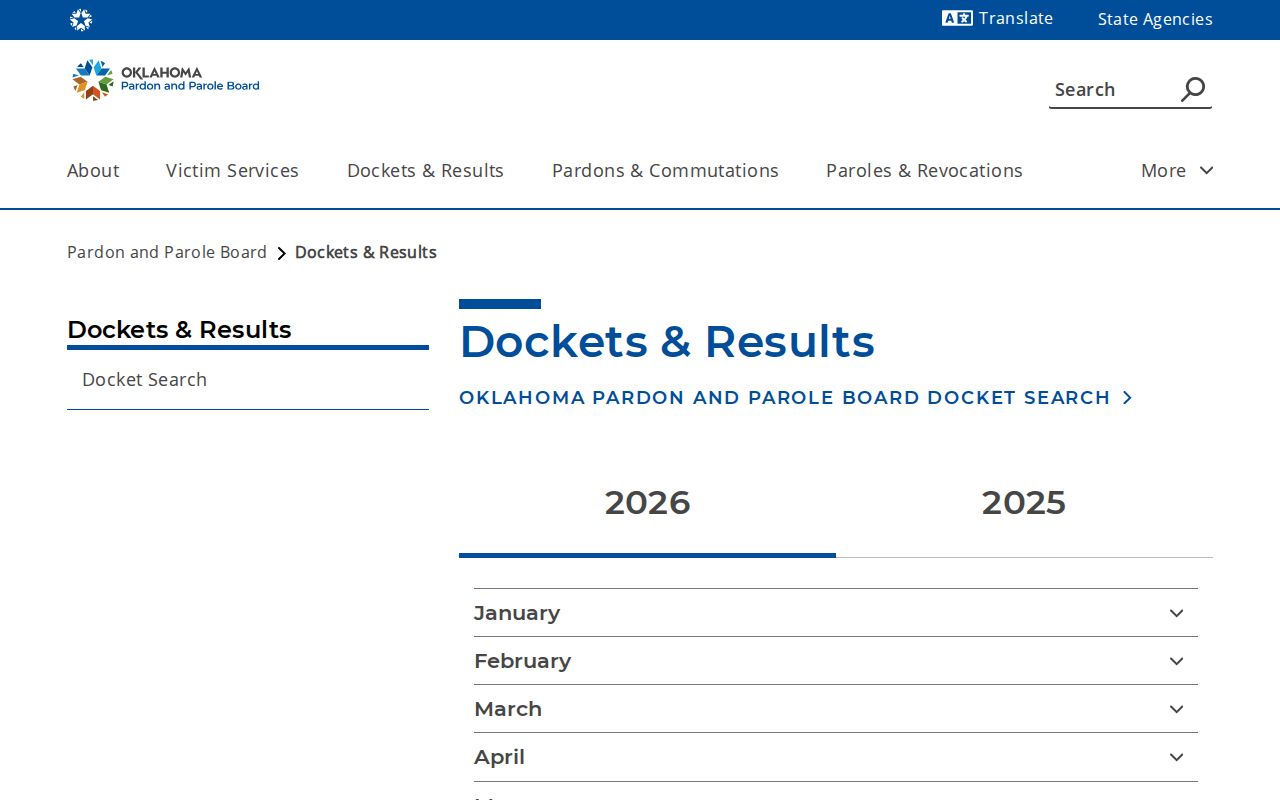
A person listed on a docket may still await a decision or later processing. Confirm the current Comanche County supervision status in ODOC.
Monthly results may show favorable action, denial, pass, stricken, deferred action, or another official outcome. Read the legend in that month's document. Depending on the offense and type of proceeding, further executive review may follow a recommendation. Residence planning, stipulations, detainers, and ODOC processing can also remain after a favorable vote.
Probation needs a different court check. Search the Comanche County case in OSCN and read the Judgment and Sentence, not just a brief docket label. A suspended portion can place the person on probation after confinement ends. A deferred sentence can postpone judgment and later qualify for dismissal under its terms. Neither label alone shows whether every other case or hold has ended.
Comanche County Supervision Offices
ODOC assigns Comanche County to its Lawton Probation and Parole operation. The agency publishes two Lawton addresses with the same main telephone and fax numbers. That does not make both addresses interchangeable reporting sites. Office assignments can depend on the case, officer, and current directions.
ODOC Lawton Probation and Parole
3801 SW 6th Street
Lawton, OK 73501
Phone: 580-248-9146
Fax: 580-248-7617
ODOC Lawton Administration
602 SW Highland Avenue
Lawton, OK 73501
Phone: 580-248-9146
Fax: 580-248-7617
The ODOC Lawton office listing is the source for both locations.
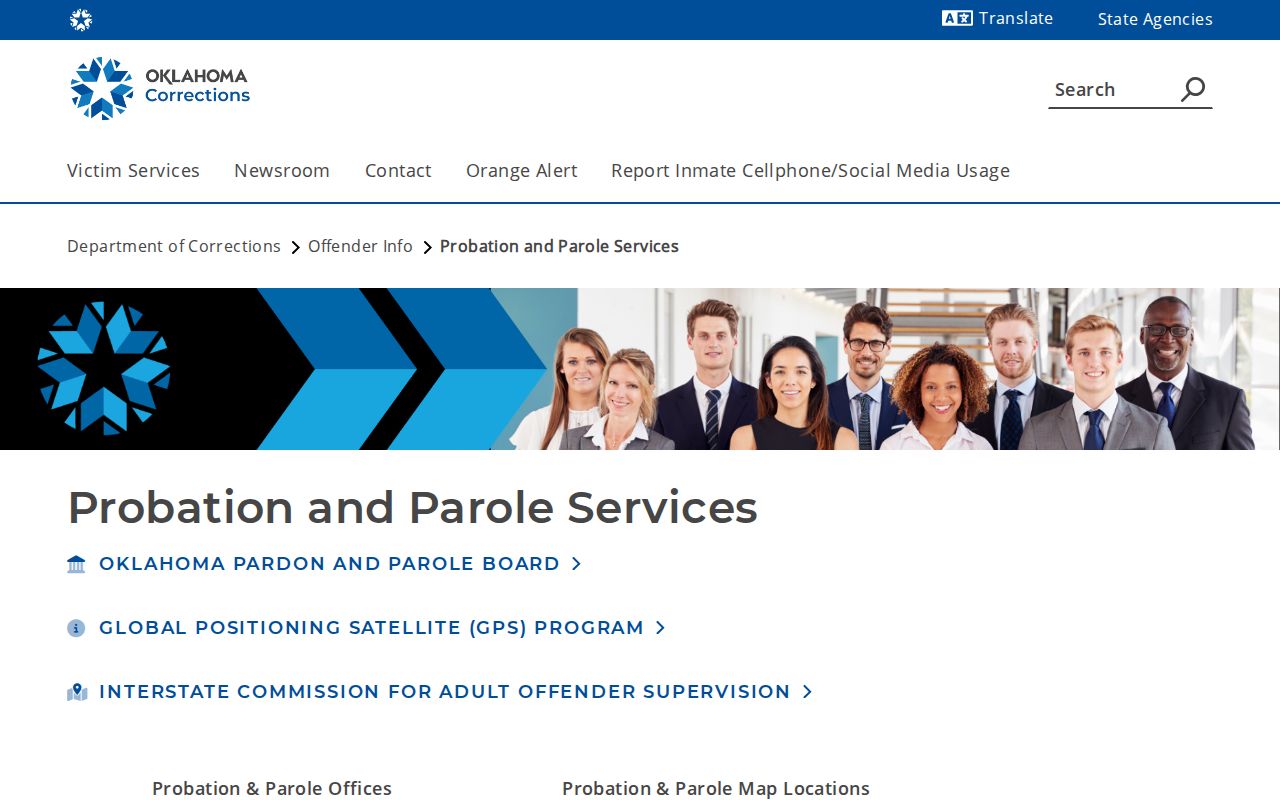
The directory confirms county responsibility, but an assigned officer remains the best source for where and how a supervisee must report.
Important: Call the published main number for routing. Do not assume an address in an online status field is an instruction to appear there.
Comanche County Supervision Warrants
Conditions are the rules attached to parole or probation. Their exact terms come from the parole certificate, court order, and supervising officer. A new court filing, revocation motion, or warrant can change the legal posture. Yet a violation allegation is not the same as a final revocation finding. Read each agency label literally.
An absconder is a person supervision authorities report as unavailable or not complying with required contact. ODOC maintains fugitive-warrant functions and warns the public not to approach a listed person. A warrant does not erase the earlier release. It means the person may face arrest and a formal process concerning the alleged violation. Tips belong only with the official agency contact. Personal intervention is unsafe.
A violation can lead to a hearing, a court filing, added conditions, or revocation, depending on the type of supervision and authority involved. Revocation means that the court or agency withdraws the community placement under the governing process. It can result in custody, but a filed allegation is not the final outcome. Check the later order or agency status before describing what occurred.
OK VINE may report a later custody event if a participating jail or prison receives the person. It is a notification channel, not a full probation case file. Court dockets, ODOC status, and the supervising office remain the stronger sources for the cause and current stage.
Note: A board action, supervision warrant, and physical custody change are separate events and may appear in different systems.
Ending Comanche County Supervision
Supervision ends through an official discharge, completion, court action, or another documented outcome. A date that was once projected is not enough. Look for a final ODOC status or discharge entry, and read any Comanche County court order that controls probation. Multiple cases can run at the same time, so the end of one obligation may leave another in force.
ODOC policy distinguishes active field records from closed records. A field record stays active until discharge from custody or supervision. When someone moves to parole or probation, the file is routed to the proper region. On final discharge, legal and field files are digitized and sent to Closed Records. A record disappearing from a public screen therefore does not mean the state file was destroyed.
Public lookup data is abbreviated. A precise state-record request can identify the person and DOC number and ask for the public face sheet, reception and release history, sentence data, discharge certificate or public release entry, and any public photo. Confidential medical, security, victim, and case-management material can remain closed. A Comanche County court-certified copy still comes from the court clerk.
For a durable account of the original county release, follow the records process described on the Comanche County released inmates search. That jail record and the later supervision discharge document different events.
Comanche County Release Property Rules
Leaving CCDC and starting probation are separate acts, but property return can be a practical part of the same day. The detention center states that stored personal property is returned to the person upon release. That handoff can help show physical exit, though it does not identify whether the legal reason was bond, time served, dismissal, or transfer.
A family member may sometimes collect property only after written authorization from the person in custody and approval by the jail administrator. The CCDC inmate money and property rules control that process. The rule does not let a caller infer supervision status. ODOC and the court still supply the parole or probation record.
Where Comanche County Probation Reports
The two published Lawton addresses create a local trap. A directory entry shows where an office operates, not necessarily where a particular person must report. Reporting instructions may name one site, an assigned officer, a date, or another approved method. Missing a requirement can have serious effects, so the supervisee should use the actual case instructions rather than a general web listing.
Someone else can use the main number for appropriate routing, but staff may limit what they disclose. That limit does not prove the person is off supervision. Match ODOC status, the court or PPB record, and the office assignment. Together, those sources answer whether Comanche County parole or probation is active without stretching any single record beyond its purpose.